WMEP E-Commerce Platform Overview

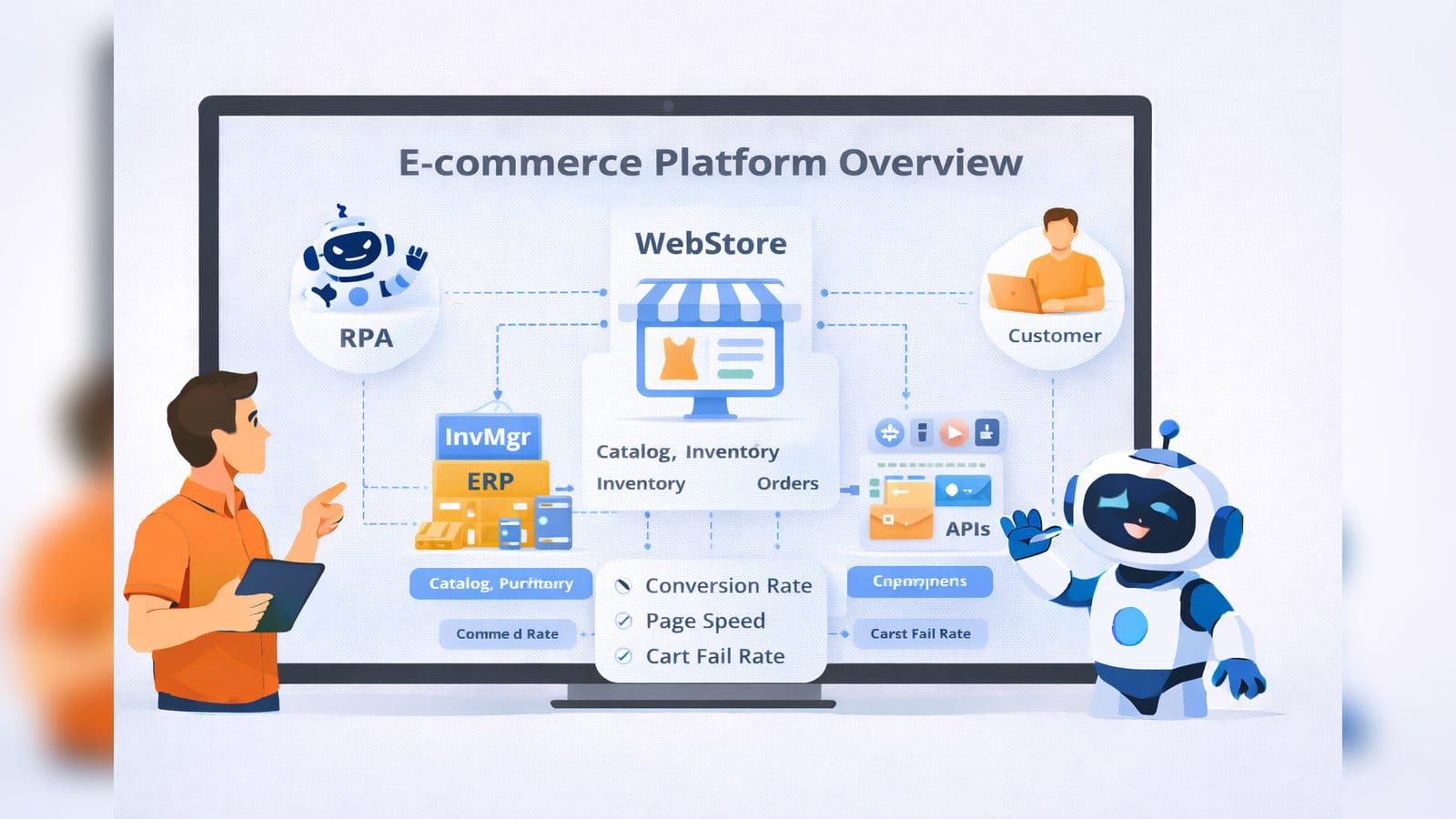
WMEP is the end-to-end commerce system made up of two major parts: the WMAG web storefront and the InvMgr ERP. I built and own the WMAG storefront, and I am responsible for the overall WMEP operation and evolution as the e-commerce manager.
Platform overview
WMAG Web Storefront Platform
- Built and owned by Alexander Granovskiy
- Tech stack - Perl, IIS, SQL Server data model with 160 tables
- Scope - websites, PLP and PDP, search and merchandising, pricing and promos, content and DAM, checkout, payments and risk, feeds and APIs, auth, logging and observability
- KPIs - conversion rate, page speed, cart fail rate
- Interfaces - pulls catalog, pricing, and inventory from InvMgr; sends orders and status requests to InvMgr
InvMgr ERP
- Originally built and owned by the Principal ERP Systems Engineer
- After the original engineer left, I took ownership of keeping the ERP and storefront integration stable, reliable, and evolving as part of my e-commerce manager role
- Tech stack - VB.NET, SQL Server data model with 270 tables
- Scope - PIM and catalog, purchasing, inventory, WMS, order orchestration and shipping, RMA, vendor, reporting, carriers, marketplaces
- KPIs - stock accuracy, PO cycle time, pick-pack time
- Interfaces - publishes catalog and inventory; system of record for orders; owns returns and RMA; consolidates operational reporting
Interface contracts
- Catalog - InvMgr is the source of truth; WMAG Storefront pulls normalized SKUs, variants, attributes, and pricing windows
- Inventory - InvMgr publishes on-hand, allocated, and available; WMAG Storefront consumes near real-time deltas for PDP and cart gating
- Orders - WMAG Storefront creates the order; InvMgr owns pick-pack-ship; tracking and status flow back to the storefront
- Returns - InvMgr owns the RMA lifecycle; the storefront reflects status and customer communications
- Reporting - InvMgr consolidates operations
WMAG module index
Checkout, payments, and order flow
- One-Page Fast Checkout Module
- Payment Processing Module
- Order Payment Data Sanitization Module
- Sales Tax Calculation Module
- Shopping Cart Page Module
- Automated Order Processing Module
Trust, risk, and identity
- Order Risk Rules Engine Module
- Visitor Device Fingerprinting Module
- IP Address Verification Module
- Customer Identity Verification Module
- Email Address Misspelling Correction Module
- Email Address Validation Module
- Postal Address Correction Module
- Postal Address Verification Module
Search, discovery, and site navigation
- Product Full Text Search and Query Handling Module
- Full Text Search Thesaurus Builder Module
- Full Text Search Index Health Monitor Module
- Semantic Query Clustering Engine Module - Concept
- Semantic Query Clustering Engine - Data Sources and Filters
- Structured Data Module
- Website Sitemap Module
- Layered Navigation Module
- Website Main Menu
Website pages and UX components
- Home Page Module
- Product Listing Page Module
- Product Quick View Module
- Product Details Page Module
PDP and product experience
- AI Product Overview Module
- PDP Semantic Similar Products Module
- PDP Customers Who Bought - Also Bought Module
- PDP Customers Who Viewed - Also Viewed Module
- PDP Related Products Module
- Multi-Source Video Player Module
Data feeds and automation
- ERP Product Data Feed Processing Module
- ERP Inventory Data Feed Processing Module
- Google Merchant Center Data Feed Module
- Automated Content Moderation Module
- Automated Image Moderation Module
- Visitor Behavior Tracking Module
Marketing and experimentation
- Sales and Marketing Calendar Module
- Discount Rules and Promotions Module
- A/B Testing Module
- Product Reviews Management
Notes
- Several modules work together as systems, not standalone features - for example, search and merchandising, checkout and risk, and feeds and compliance.
- If you are browsing for outcomes, start with the case studies and playbooks, then drill into modules.
Contact: granovskiycontact@gmail.com
www.linkedin.com/in/alexander-granovskiy/