E-commerce Team Structure Playbook

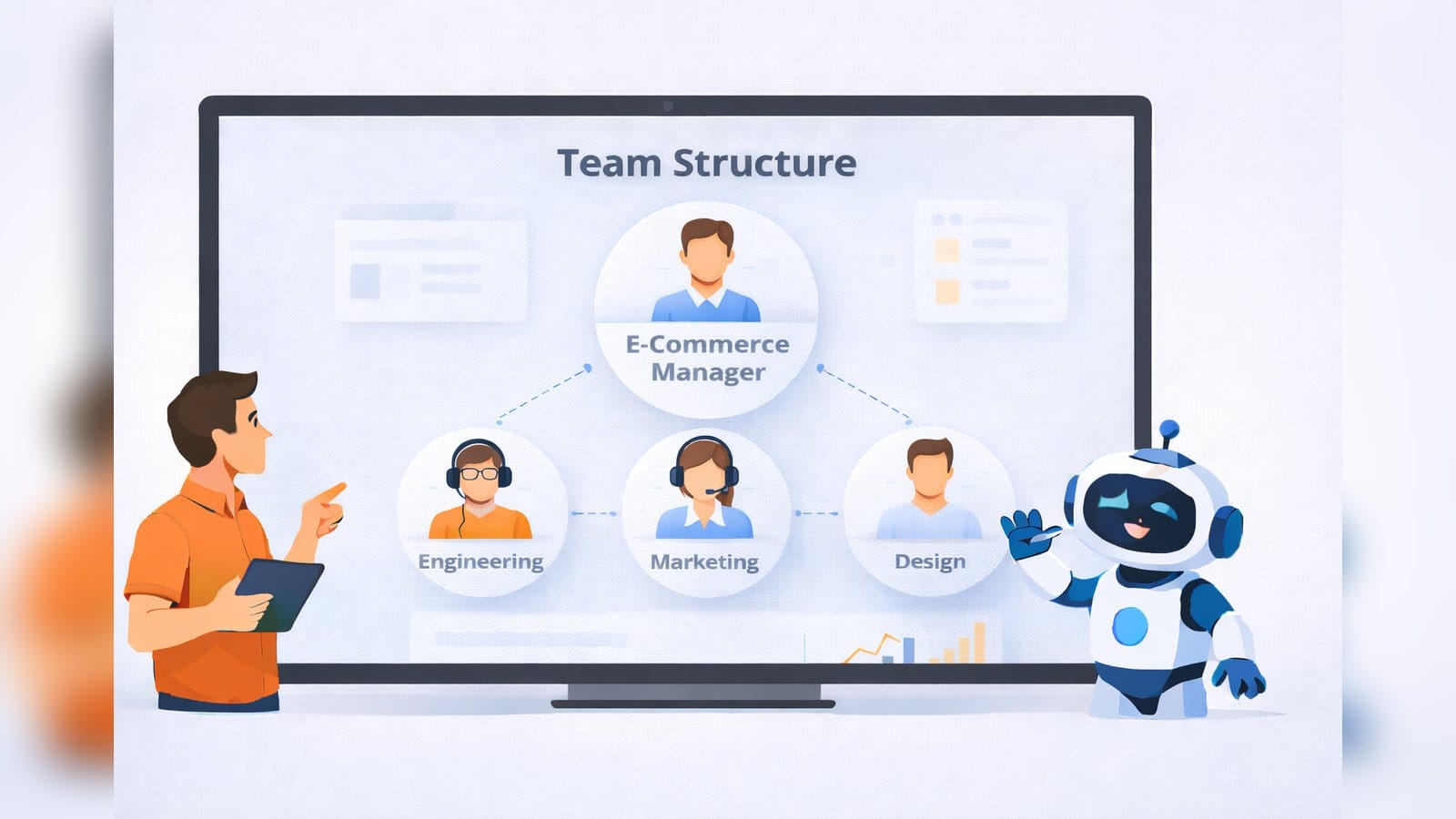
Team Structure Playbook
Purpose
Define clear ownership across e-commerce growth, platform, operations, marketplaces, and risk - and make hiring and onboarding repeatable.
Roles
E-commerce Manager
- Own the e-commerce platform - architecture and delivery
- Own the roadmap
- Run the weekly business review
- Own P&L accountability
- Drive profit through conversion rate, AOV, traffic mix and ROAS, payment fees and approval rate, return rate, and fulfillment cost per order
Marketing Specialist
- Own paid ads
- Own SEO
- Own the email calendar
- Own landing pages
Principal ERP Systems Engineer
- Own ERP architecture
- Own VB.NET and SQL Server data model
- Own PIM, inventory, and WMS
- Own order orchestration
- Own RMA
- Own reporting and integrations
Operations and CX Manager
- Own fulfillment SLAs
- Own returns
- Own CX processes
- Own standard operating procedures
- Own continuous improvement
Payments and Risk Analyst
- Own fraud scoring
- Own chargeback prevention
- Own settlement monitoring
Marketplace Operations Specialist
- Own listings
- Own pricing
- Own feed health
- Own order sync
- Own channel KPIs
Content Manager
- Own product data quality
- Own taxonomy
- Own copy quality
- Own the publishing calendar
Graphic Designer
- Own product imagery
- Own banners
- Own promo assets
- Own email graphics
Copywriter
- Own PDP copy
- Own SEO text
- Own emails
- Own UX microcopy
Hiring and enablement
Role design
- Define outcomes
- Define KPIs
- Define 90-day plans
Onboarding
- Use playbooks
- Provide tooling access
- Assign training modules
Runbooks
- Checkout issues
- Payment declines
- Feed errors
- Ship delays